The storytelling strategies of Celeste help the player to identify closely with the protagonist. Celeste crafts an emotionally sensitive gaming experience, encouraging the player to fail and learn from their mistakes in order to reach the top of the mountain.
The 3D level select screen sets the scene for the 2D pixelated platform game play, helping to emotionally center the player before we start fighting on the protagonists behalf. In Adrienne Shaw’s Gaming at the Edge, she notes that “identification, according to interviewees, occurred largely through the narrative, non-medium-specific aspects of games rather than through their interactivity” (101). Celeste successfully builds a heartfelt narrative through the 3D screens that push the narrative forward, bookending the 2D platformer levels. Another detail that pushes identification forward in Celeste is the fact that the game also lets you name the protagonist. I chose to name her my own name, which I think subconsciously lead me to put myself in her shoes even though I was observing her from a third person perspective.
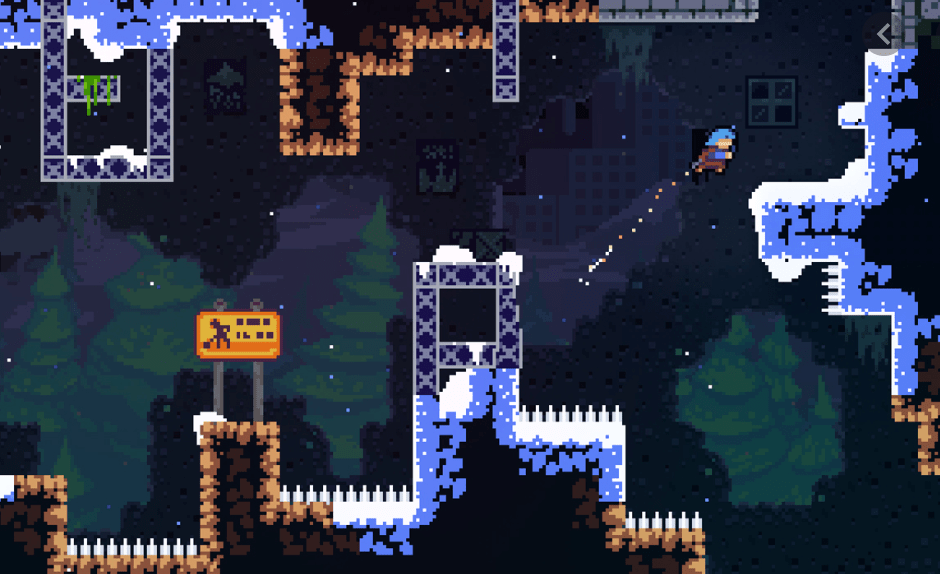
The mechanics also get you emotionally invested in the story, empowering you to overcome even the trickiest obstacles that game hurls at you. Everything in the game looks impossible before you’re slowly introduced to new mechanics that allow you to overcome your limitations, acting as a tidy metaphor for overcoming human struggle, something everyone can relate to on an emotional level. The platforms look unmanageably difficult as you get further and further into the game. For instance, the introduction of the spiky, icy walls makes it seem as though you have no chance. But the game introduces the dash mechanic, which allows the player to accomplish the seemingly impossible. When you die, the game speedily places you right back to where you were at the start of the current platform. It encourages you to fail, die hundreds of times, and learn from your mistakes without punishing you for the process. It motivates you to keep going and persevere through the trickiness in order to reach your goal by feeding you bits of story in between the platforms you move through.
Celeste elevates the basic platformer format that we all know and love to something truly special—an emotional experience that, by the end, affected me greatly. I felt so invested in the story and what would happen next, and I would attribute that investment largely to the skillfully employed storytelling strategies. Giving us little bits of story at a time, rather than all at once, made me want to keep playing and wish for it to never end.
Gaming at the Edge: Sexuality and Gender at the Margins of Gamer Culture by Adrienne Shaw
 Sadie's Play Journal